SoHo State of Mind

May 18, 2013
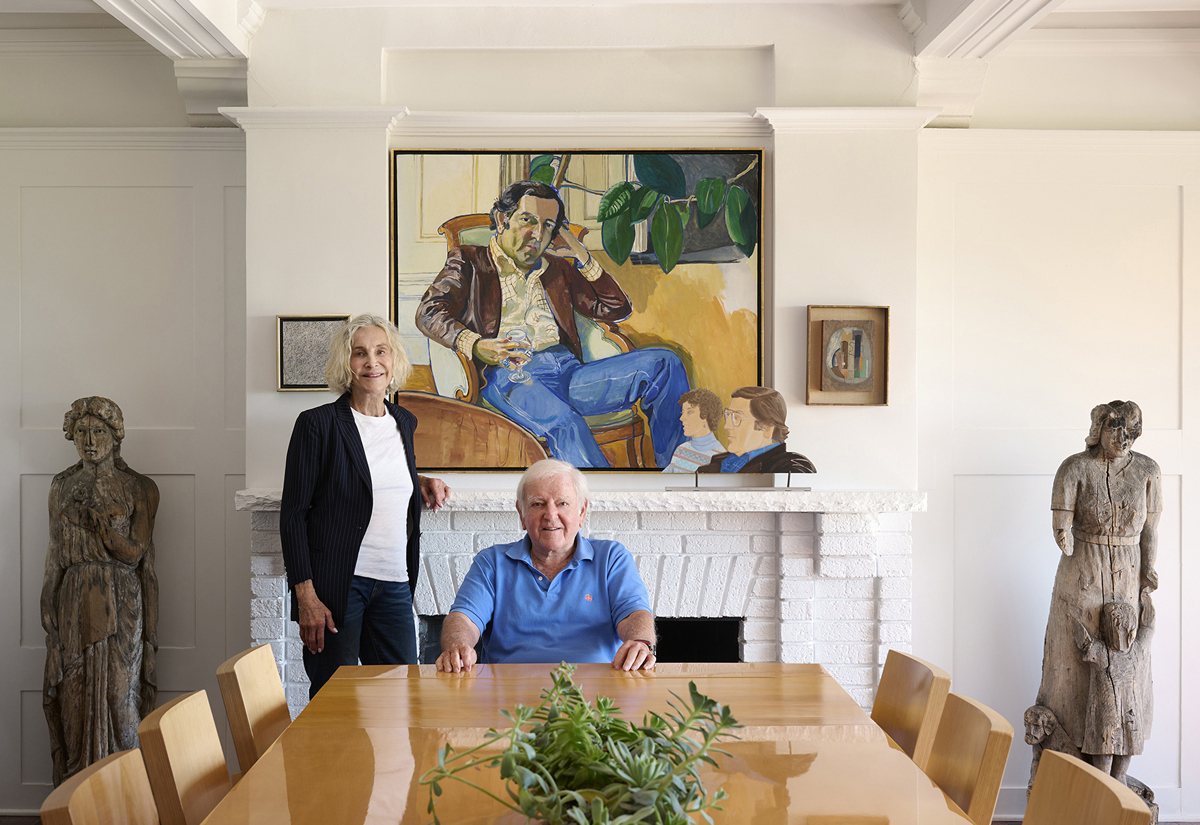
The opening reception for the SoHo Memory Project exhibition.

At the opening reception for the SoHo Memory Project exhibition.

This is week three of my SoHo exhibition.  I think it has been rather successful thus far.  Not in the sense that it has drawn large crowds from far and wide, but it has shed a (dappled) light on the mysterious ways of my ex-expat parents in the eyes of locals.  My parents spent more than half of their lives in New York.  How could they not have brought it back to Okazaki with them?

First of all, everyone now sees that what they thought was my parents’ unusual and excessively large live/work space, is de rigeur in SoHo.  Japanese homes are small, cramped abodes with small cramped rooms that at first glance appear more spacious than they really are because everything, from the sofa to the plates to the people themselves are a few degrees smaller than in the US, thus everything is to scale, as if the whole environment were thrown in a dryer set on high.  But then you realize that the overflowing plate of food offered at dinnertime is in fact a Lilliputian feast and that you are starving as soon as you’ve finished your mini-meal.  Yes, even the pieces of sushi are smaller here.

In contrast, my parents have recently super-sized their living quarters.  While they were camping out in the back of the Blue Box Gallery, they decided to build a house on the lot next door that was being used for parking.  Again, instead of building a house like all the others in the neighborhood, my father designed a three-story “loft building” where he could have an entire floor as a studio and then a spacious living space above.  The ground floor, still vacant, is a commercial space that can be used for art or dance classes or as an exhibition space, TBD.  The building has exposed cement walls, wood floors, and high ceilings, a la SoHo 1975, but also includes all of the modern conveniences of Japan 2013, such as a bathtub with a digital control panel where you can set and maintain the temperature of the bath, shower, and air, all separately, and a pleasing tune plays throughout the apartment as a soothing woman’s voice announces that your bath is ready and is at your desired settings.

The control panel of my parents' bathtub

The control panel of my parents’ bathtub

Then there’s the more intangible SoHo ethos that emanates from The Blue Box.  Japan is not a country that generally celebrates difference.  People seem to work hard to blend in, to toe the party line in terms of behavior, dress, even how they pass their leisure time.  This is kind of a bummer for any arty eccentric types.  They must remain closeted or else risk ridicule.  Not anymore!  The Blue Box is a haven for the square pegs of Okazaki.  They come to hang out and chat and let it all hang out.  My father has a motley posse of “misfits,” who in New York would just blend in, but then, who doesn’t blend in in New York, save for a group of Japanese tourists?

I asked visitors to the gallery to share their impressions of the exhibition.  People mostly said what you would expect, “I never knew that SoHo had such a rich history,” and “I would like to visit SoHo now that I know something about it.”  One visitor wrote me a note reflecting on my childhood that said, “To bring a well-balanced, well-rounded child into the world is quite difficult.  It takes a broad-minded community, home, and family working together to achieve this.  You are very lucky to have had such a life!”  Lucky, indeed.  I will keep this in mind while raising my daughter, also a child of SoHo, with the hope that when people see her exhibition about the SoHo of her childhood, they will know that she, too, was a lucky kid.

Thinking Inside the (Blue) Box

May 4, 2013
Facade of the Blue Box Gallery in Okazaki, Japan

Facade of the Blue Box Gallery in Okazaki, Japan

Greetings from Okazaki, Japan, hometown of my mom and dad who lived in SoHo for 45 years before moving back here just this year.  Taking their wealth of experience as artists and then gallery owners in New York, they have opened a gallery here in an old warehouse that used to house, of all things, a fabric recycling storage space.  Yes, the rag trade, so prevalent in SoHo when my parents arrived in 1968, followed them all the way back to Okazaki.  How could they NOT open a gallery in this space?

While visiting his childhood home about ten years ago, my father came upon an abandoned warehouse.  He inquired about the 2,500-square-foot space and quickly secured a ten-year lease at the equivalent of $850 per month.  The landlord was probably thinking, who in their right mind would want such a space now that fabric recycling has been moved offshore?  My father painted the exterior a happy shade of blue and aptly named the building “The Blue Box.”  He then slowly, using his carpentry skills that put me thought college, built a live-work space comprised of studio space, a large exhibition space, and a kitchen and loftbed in the back.  Sound familiar?  You really can’t teach an old do new tricks.

The gallery is quite vast, with two large rooms and another small room in the back.  It is in this cozy third space that I have put together an exhibition about the history of SoHo, an analog SoHo Memory Project, so to speak.  I thought the residents of this sleepy city (think outskirts of Hartford) might be interested in knowing a little about the place my parents disappeared to for so long.  Most of the people who will visit this exhibition will not have ever been to New York, and will not have heard of SoHo.  How does one convey SoHo’s rich history and culture to someone whose frame of reference is, at best, the film After Hours dubbed into Japanese?

The following is a video sneak peak of the exhibition.  Please excuse the shaky video and improvised narration.  Tune in next time for a post-vernissage debriefing!

Frieze Frame: FOOD 1971

April 27, 2013

FNY_CATAt this year’s Frieze Art Fair New York on Randall’s Island from May 10-13, there will be a FOOD pavilion—not food as in food court, but a “re-enactment” of FOOD Restaurant in SoHo!

Every day a different artist will cook.  This is the program (11 a.m. to 7 p.m.):

Matthew Day Jackson (Thursday) May 9
Carol Goodden (Friday) May 10
Jonathan Horowitz (Saturday) May 11
Tina Girouard (Sunday) May 12

Some of you will remember Carol Goodden, co-founder of FOOD with Gordon Matta-Clark in October 1971, who will be present at Frieze to prepare some of her famous delicious, hearty soups.  Born in London, during WW II, Goodden was all too familiar with the personal project of how to stay warm in houses without central heating.  Besides steeping in a hot bath, there was the method of internal warming – via hot tea, porridge, or soup.  Soups offer fabulous nutrition and stick with you better than tea or porridge.  But mainly the conception of any soup can excite a good cook’s imagination.  They can be used as “paintings” to decorate the table with a colorful carrot soup, or dark greens with whites – aromatic.  They can be beefy, grainy, thin, gingery, heavy for winter, cool and crisp for the summers, even fruity. Read the rest of this entry »

A Walk to Remember

April 20, 2013
Today’s guest post comes from Linda Chiu at New York History Walks, a “history buff who loves exploring the city on foot.”  Her blog takes you on historic meanderings throughout the city, a must read for anyone interested in our city’s past.  The following post is about the history of SoHo as it revolves around the Haughwout Building at Broadway and Broome streets.

Hell’s Hundred Acres

by Linda Chiu

Soho has undergone many transformations throughout its history, and was not always the hub of trendy boutiques and chains that it is today. At the end of the Revolutionary War, Soho development earnestly began when Collect Pond was filled and its water diverted to the Hudson River. Middle-class families inhabited Federal-style rowhomes and by the 1800s, Soho had become a popular commercial district with theaters and retailers such as Lord and Taylor, Tiffany & Co., and the long-gone Haughwout Emporium. Read the rest of this entry »

A Tree Grows in SoHo

April 6, 2013

IMG_3385This past week, we had the trees in the back yard of our building taken down.  They were sick and old and we intervened too late to save them.  They had become a serious liability, growing higher than our four story building, their soaring limbs just waiting to be blown away in the next big storm.  A neighbor reflects on our loss:

I know she had to come down but I was crazy about that tree. Ghetto palms in general and “ours” in particular. Such a wondrous species. I remember examining the roots when I was little and being amazed to discover that it was growing out of about an inch of silt on top of concrete. And over four decades grew to be four stories tall! Beautiful, where and how they take root.

It was thus an eerie surprise when Roz Bernstein, co-author of Illegal Living: 80 Wooster Street and the Evolution of SoHo and resident of Wooster Street, sent me the following guest post about the beloved trees on Wooster Street being taken down.

SoHo’s Purloined Trees Are Gone

By Roslyn Bernstein
The facade of 80 Wooster Street before the tree was removed

The facade of 80 Wooster Street before the tree was removed

Recently, the New York City Department of Parks sent six men and three trucks with two chain saws to cut down George Maciunas’s trees. The noise was deafening as one of the men, in a cherry picker, wielded his saw while the other below was piling the fallen limbs.

The founder of the Fluxus Art movement, the founding father of SoHo, and the man whose office was in the basement of 80 Wooster Street, Maciunas would never have let it happen. Not if he were alive!

Liberated some 45 years ago, when Maciunas uprooted two trees from a parking lot near Canal Street, they were planted in front of 80 Wooster to conceal the ingenious electrical work done by Maciunas’s workers to provide free electric service to Jonas Mekas’s ground-floor, avant-garde theater, the New York Film-makers’Cinematheque.

According to a tale told by Mekas, the morning after the trees were planted, two female police officers came to Mekas and told him to remove the purloined trees. Mekas woke Maciunas who was still asleep in his basement space only to be told that Mekas should tell the officers that, if they wanted to, they could remove the trees themselves. Armed with his Bolex movie camera, Mekas conveyed the message. After a moment or two the officers left, never to return. Read the rest of this entry »

And the survey says…

March 23, 2013
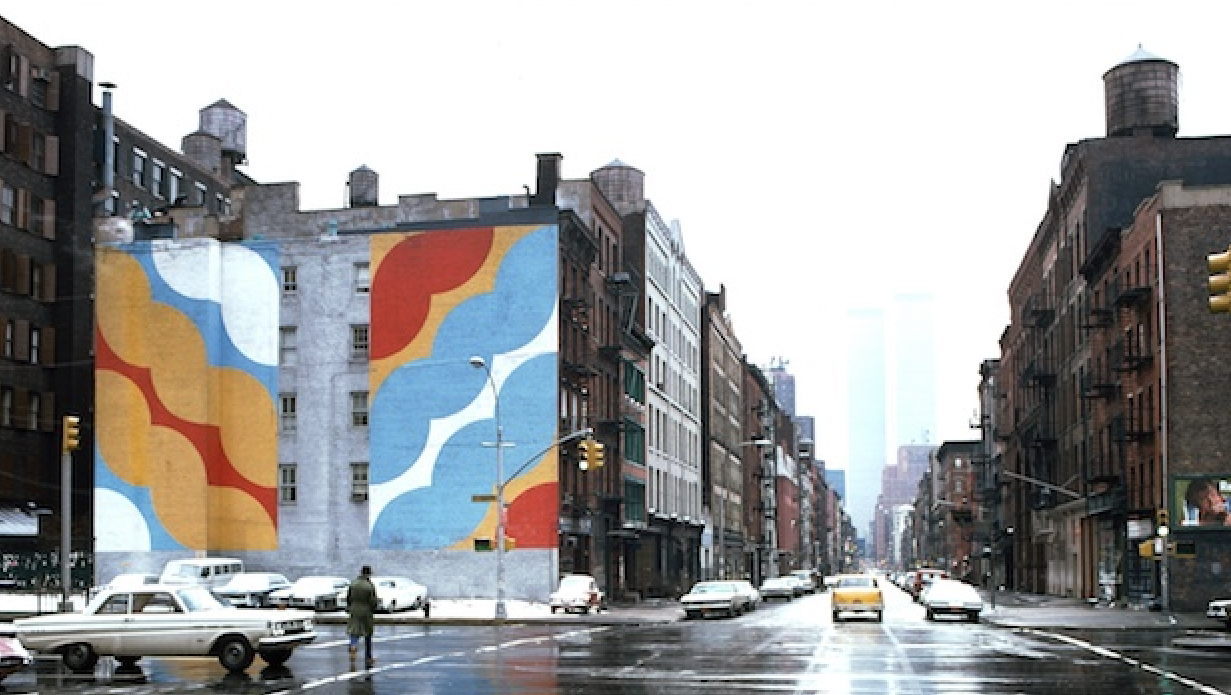
Jason Crum mural sponsored by City Walls at West Broadway and Houston (photo by David Bromberg)

Jason Crum mural sponsored by City Walls at West Broadway and Houston (photo by David Bromberg)

Thanks to all of you who filled out my “SoHo Survey” over the past two years (those of you who have not yet filled one out, click on the “Your SoHo Profile” link to the right).  It’s been great to read about all of your memories of old SoHo.  I thought I’d share some of them here anonymously.  Although I received a wide variety of responses to each of the questions, I feel that I can somehow relate to all of them because my memories of SoHo, like yours, are so varied, bitter and sweet, dark and light, foul and fond.

Read the rest of this entry »

The Times They Are a-Changin’

March 9, 2013
SN head
 
The following article by Jim Stratton appeared in the June 7, 1974 issue of the SoHo Newsletter in response to a series of articles about SoHo that appeared in the May 20, 1974 issue of New York Magazine.  I have also attached the two NYM articles to which Stratton refers (thanks, RF!).  These articles appeared around the time when loft living was transformed in the popular consciousness from a way of life to a “lifestyle.”  SoHo residents fought valiantly to protect their Shangri-la, or to at least slow down the pace of development in their neighborhood, but, in the end, no person or group of people was able stem the tide of hipification.
Illustration from the SoHo Newsletter, June 7, 1974

Illustration from the SoHo Newsletter, June 7, 1974

The Most Exciting Place to Destroy in New York

“…This is the fourth time SoHo has arrived.  Perhaps more than any other part of the city, the area has swung between boom and bust…”

Thus begins part of the first of a superficial, counterproductive, and downright mendacious glimpse of this neighborhood by New York Magazine.  What is most galling is that the magazine’s so-called reporters had access to much material and many people, then chose to ignore all that didn’t fit with the narrow profit motive of their publishers. Read the rest of this entry »

Urban Archaeology

February 23, 2013
Mail addressed to P. Aiervaiss with late-19th century postmarks

Mail addressed to P. Aiervaiss with late-19th century postmarks

I seem to be in full archivist mode these days and I hope you all will bear with me.  One little bit of ephemera leads to another and then another….

The other day, Chris, a local old-timer, sent me photos of a few items he has hanging on his kitchen wall.  Old envelopes, bank letterhead, and a brochure, among other things. Chris is an urban archaeologist of sorts.  He has worked in construction in and around SoHo for over 25 years and has unearthed loads of SoHo memory from in between wall joists, the detritus of past workers who were too lazy to take out the trash and, instead, buried it in the walls for future generations to find.  My father has also worked in construction since I was a baby.  He, too, found loads of mostly food wrappers and beverage cans printed with brand names that no longer exist.  We called it “wall garbage,” and it was what was left over after a lunch break or at quitting time when the floors were swept clean, which was also when the space between the walls got “dirty.”  Chris has this to say about this phenomenon:

I quickly got over the wall-garbage-habit (or as some people call it “insulation”) when I had to come back to the same job to do additional renovations and found myself with the added load of refuse. But the good stuff made its way to my house. I have found tools from a hundred years ago. Plumbers are such slobs! On Chambers Street I found a flier from the 1880′s from the Singer sewing machine company that advertised their wares. I was stupid enough to give it to the owners since it had their building’s address on it. It hangs in their office. …In my loft I found a page of the NY Post dated one day removed from my actual date of birth.   … The newspaper was still doing it’s job as backing for a quickie plaster repair. I found an American flag performing the same function on Broome Street.

Read the rest of this entry »

All the News That’s Fit to Print, SoHo Style

February 9, 2013

SWN headThe other day, I was given a treasure trove of SoHo memory in the form of two boxes full of issues of The SoHo Weekly News from 1974 and 1975 (thanks, J and C!).  I remember seeing the paper lying around the house and probably used it for more than one paper mache project, but I cannot say that I was a regular reader.  I’m sure you older folk read it religiously for local news and listings, in the way that I read the Village Voice in the mid-1980′s when I was a young, single person looking for culture, high and low.

According to the SoHo Weekly News Online, “From October 1973 until March 1982 the SoHo Weekly News was New York City’s hippest paper and guide to what was happening in Fun City.”  Read the rest of this entry »

Ephemeral SoHo

January 26, 2013
Crosby Street, 1969

Crosby Street, 1969

This May, I will be traveling in Japan with my family, and while I am there, I will be having a SoHo Memory Project exhibition at my father’s gallery in his hometown of Okazaki.  I will display of photos and artifacts related to this blog and the story it tells about the SoHo experience as lived by its pioneers.  I think that the people of Okazaki, so far removed from The United States, New York, and certainly SoHo, will find the story of what my mom and dad, who disappeared 45 years ago only to reappear this year and build a house right back where they started, fascinating, if not incredible.  I will be putting together a catalog for the show that I will share with you, and I will most certainly be posting observations from the gallery in May.

The show will feature an essay by my mother about her memory of the early SoHo days that I translated and posted here a while back, and I will display related photographs printed on several media including paper, canvas, metal and wood.  I would also like to include pieces of ephemera, such as newspapers, letters, flyers.  Basically, anything that would materially illustrate what life was like back then.  I’ve posted images of some of the items I have gathered below. Read the rest of this entry »


Follow

Get every new post delivered to your Inbox.

Join 203 other followers

%d bloggers like this: